Your customer paid. Now what?
For many businesses, the moment a payment arrives is where confusion begins.
- The customer expects action
- The team waits for instructions
- The founder becomes the middleman
- Valuable momentum starts disappearing
The truth is simple: revenue alone does not create growth. Execution does.
Why Payment Automation Is the Missing Link Between Revenue and Execution
Businesses spend enormous effort acquiring customers. They optimize marketing, sales funnels, conversion rates, and checkout experiences.
But very few optimize what happens after payment. That is where a payment automation workflow becomes critical.
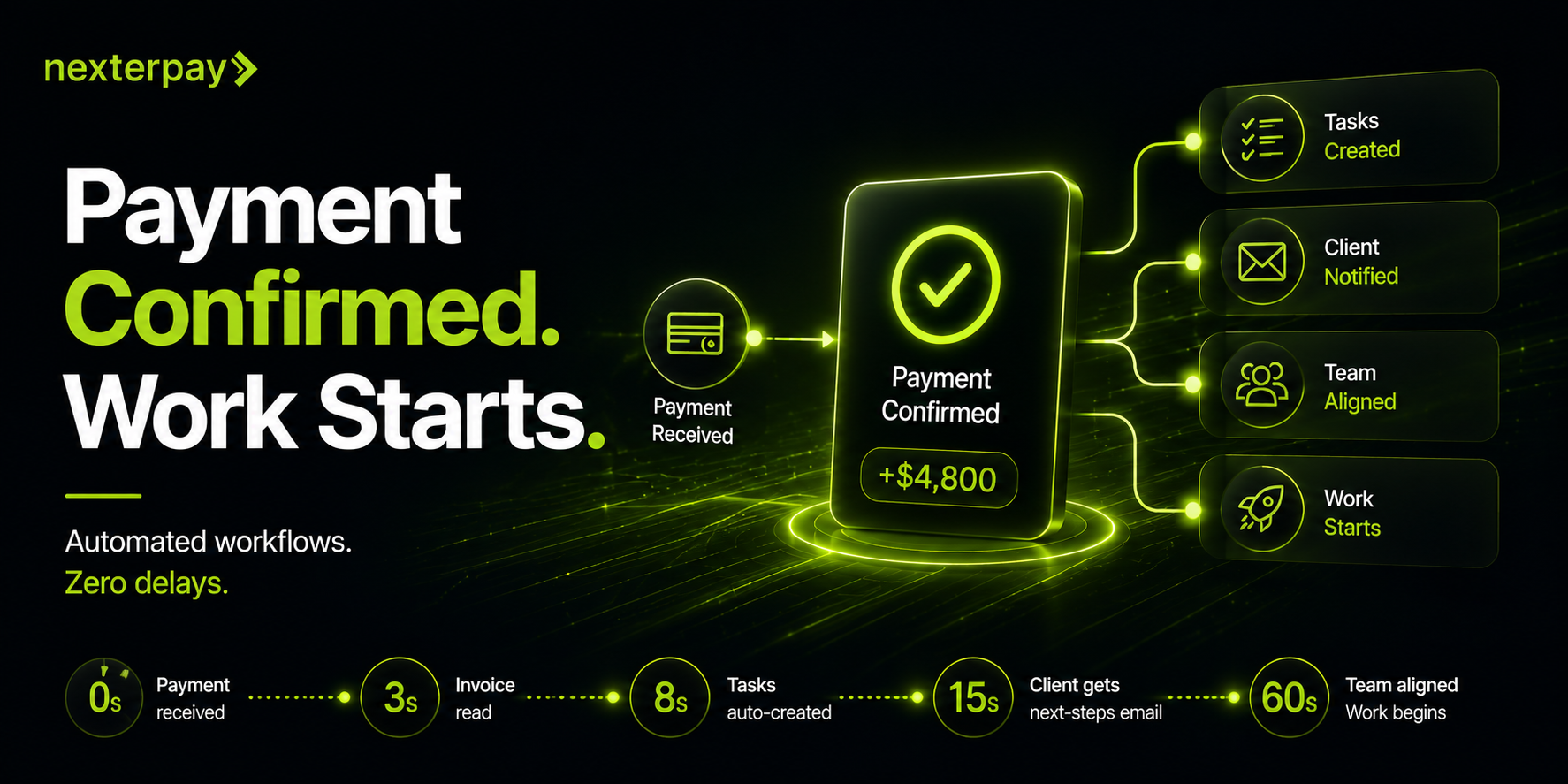
As shown in the NexterPay workflow model, many teams still rely on manual coordination after a payment is received, creating delays and bottlenecks.
- Slow project kickoffs
- Internal confusion
- Client uncertainty
- Lost momentum
Why Revenue Does Not Automatically Create Progress
Many organizations still operate like this:
- 1Payment received
- 2Someone notifies the team
- 3Someone creates tasks
- 4Someone sends updates
- 5Work finally starts
Every manual step introduces friction. Every delay reduces momentum. Every missed communication creates uncertainty.
What Modern Payment Workflow Automation Looks Like
Leading companies are changing this process entirely. Instead of treating payments as a receipt, they treat payments as a trigger.
- A trigger for action
- A trigger for execution
- A trigger for growth
The First 60 Seconds Matter
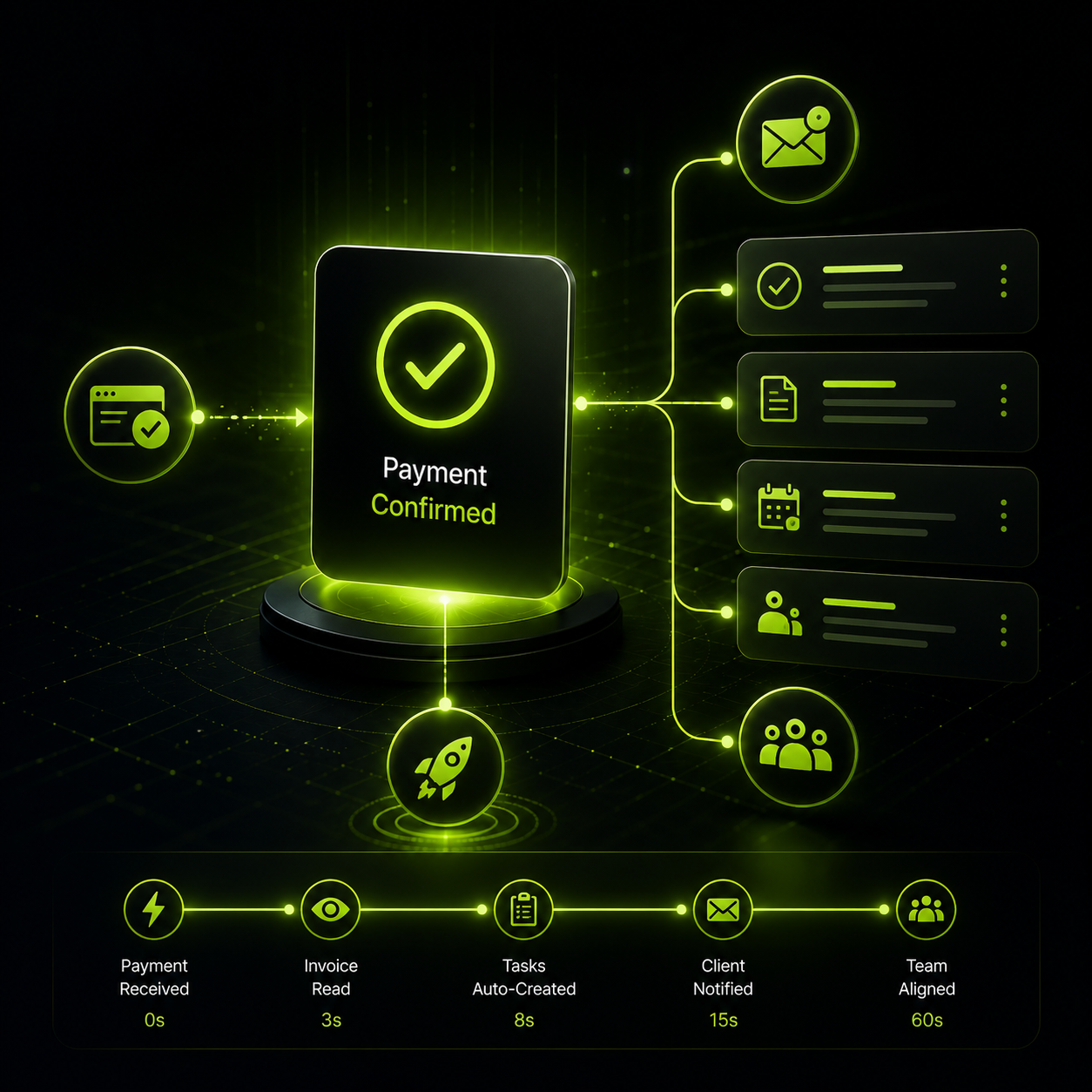
The most effective workflows begin immediately after a successful payment. According to the workflow presented in the NexterPay framework:
- 0 seconds: Payment confirmation arrives
- 3 seconds: Project information is identified
- 8 seconds: Tasks are automatically generated
- 15 seconds: The customer receives confirmation and next-step communication
- 60 seconds: The team is aligned and execution begins
No founder intervention. No confusion. No waiting.
The Cost of Manual Payment Operations Management
Many growing businesses do not realize how much time is lost after every deal closes.
The workflow examples show common issues:
- Teams asking what happens next
- Delayed project launches
- Missing context
- Constant follow-up requests
- Founders acting as project coordinators
The more clients you onboard, the bigger this problem becomes.
From Payment to Execution
Modern automation platforms can connect payments directly to operational workflows.
Automated Task Creation
As soon as payment is confirmed:
- Tasks are generated
- Deadlines are assigned
- Teams are notified
Automated Client Onboarding
Customers automatically receive:
- Confirmation messages
- Next-step instructions
- Project expectations
Project Activation
Post-payment automation starts workflows instantly without waiting for manual coordination.
The Accountability Layer
One of the most powerful benefits of payment automation is accountability. The NexterPay model introduces automated systems such as:
- Team reminders that prevent deadlines from being forgotten
- Client visibility that allows customers to track progress
- Milestone controls that ensure work progresses in the correct order
This reduces operational chaos while increasing transparency.
What Changes When Businesses Automate
Organizations that automate post-payment workflows often experience:
- Faster execution because teams begin work sooner
- Better customer experience because clients know exactly what happens next
- Reduced founder dependency because the business no longer relies on one person coordinating everything
- Improved retention because clear communication builds trust from day one
Why This Matters for Growing Businesses
As companies scale, more customers create more payments, more projects, and more operational complexity.
Without automation, growth creates friction. With automation, growth creates momentum.
That is why more businesses are shifting from payment collection systems toward payment-driven workflow infrastructure.
Related Insight
Want to see the full payment-to-execution framework?
Check out our LinkedIn post where we show how successful payments can automatically trigger tasks, communications, accountability systems, and project execution.
The Future of Payments Is Not Just About Receiving Money
For years, businesses focused on getting paid. The next evolution is knowing what happens immediately after.
The companies that automate execution will move faster than those still relying on manual coordination.
Because in modern business, payment is not the finish line. It is the starting signal.
Turn Every Payment Into Action
The most successful businesses do not stop at payment confirmation. They transform every transaction into:
- Automated workflows
- Faster execution
- Better customer experiences
- Scalable growth
Because revenue creates opportunity. Execution creates results.