
The biggest shift in payments isn't happening where most people are looking.
For years, the fintech conversation focused on:
- The US
- Western Europe
- Traditional banking systems
But the real momentum is happening elsewhere.
- Southeast Asia
- South Asia
- Sub-Saharan Africa
The businesses paying attention now will have a massive advantage later.
Global Payments Are Entering a New Era
The numbers tell the story clearly.
According to recent industry projections:
- The global payment gateway market is expected to reach $42.9B by 2026
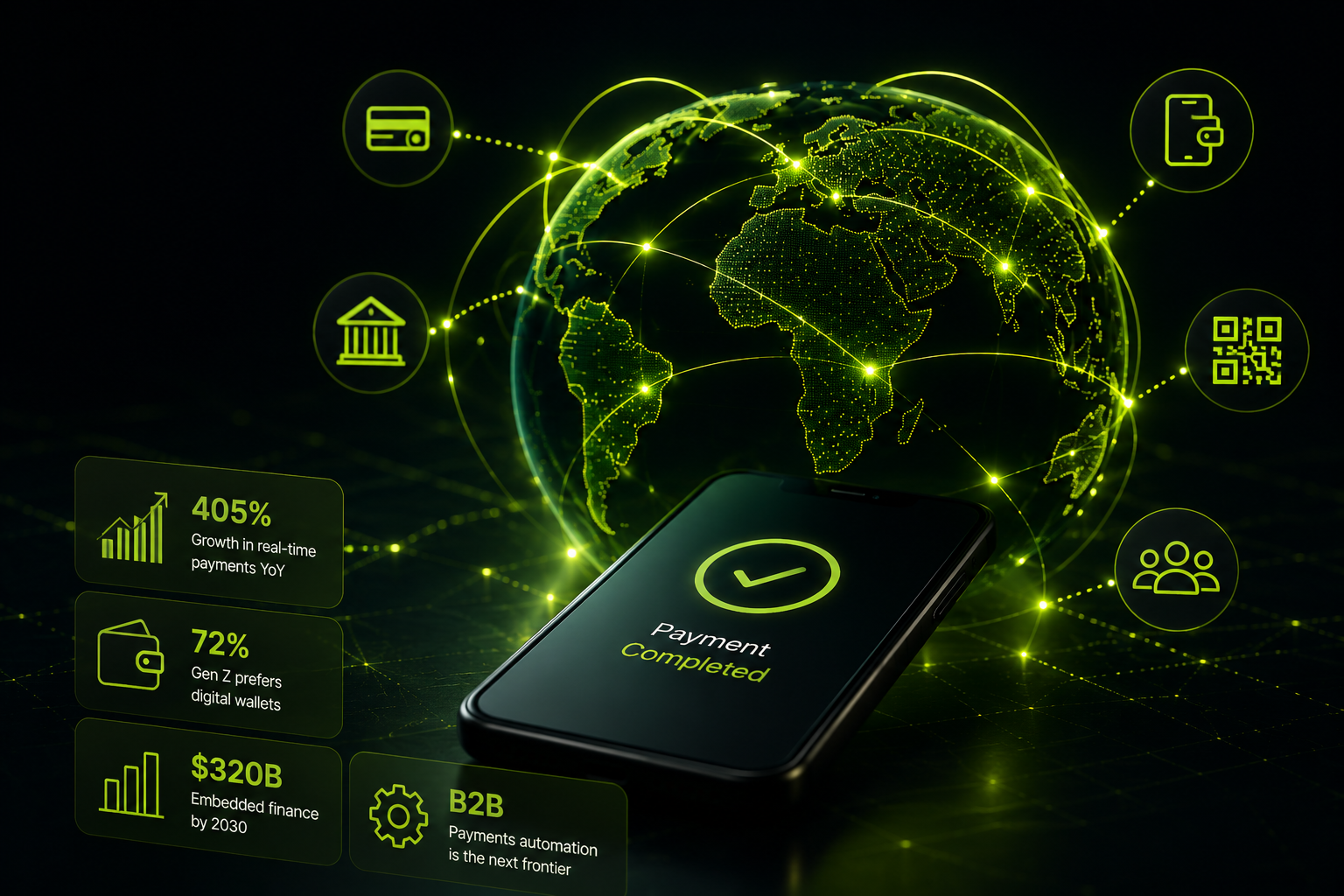
- Real-time payment transaction value has increased 405% year-over-year
- Embedded finance is projected to hit $320B by 2030
- 72% of Gen Z users prefer digital wallets over traditional payment methods
These shifts are reshaping how businesses move money globally.
And yet, most companies are still building payment strategies around outdated assumptions.
The Old Model of Payments Is Breaking
Traditional payment systems were built around:
- Cards
- Banks
- Slow settlement cycles
- Region-locked infrastructure
But modern commerce moves differently.
Today's customers expect:
- Instant transactions
- Mobile-first experiences
- Flexible payment methods
- Seamless cross-border payments
Businesses that fail to adapt risk becoming invisible in the next generation of commerce.
Where the Real Growth Is Happening
1. Southeast Asia: The Rise of Super-App Payments
In Southeast Asia, wallets are replacing traditional banking behaviors.
Users increasingly rely on:
- Super-app ecosystems
- QR payments
- Mobile wallets
- Instant payment flows
For millions of people, the wallet is the bank account.
This changes everything about how businesses should think about checkout experiences.
2. Sub-Saharan Africa: Mobile Money Infrastructure Is Leading Innovation
Many people still underestimate Africa's payment ecosystem.
But mobile money infrastructure in Africa is years ahead of traditional assumptions.
In several markets:
- Users move money instantly from phones
- Cash dependency continues to decline
- Financial access is growing rapidly through mobile ecosystems
This is not a future trend. It is already happening at scale.
3. South Asia: Real-Time Payments at Massive Scale
Real-time payment rails in South Asia are processing volumes many Western systems haven't reached yet.
Consumers expect:
- Instant confirmations
- Seamless transfers
- Mobile-native payment experiences
Waiting days for settlement is becoming unacceptable.
The Rise of Embedded Finance
Another major shift? Payments are disappearing into the product experience itself.
This is the rise of embedded finance.
Instead of sending users elsewhere to complete transactions:
- Payments happen inside apps
- Financial tools become part of the workflow
- Checkout becomes frictionless
Industry forecasts now project embedded finance to become a $320B market by 2030.
The businesses integrating finance directly into their platforms today are building stronger retention and higher conversion tomorrow.
The Most Underserved Opportunity in Payments
While consumer fintech gets most of the attention, B2B payment automation remains one of the biggest untapped opportunities.
Many businesses still struggle with:
- Manual invoicing
- Delayed settlements
- Poor reconciliation workflows
- Fragmented payment systems
Many teams lose momentum after closing deals because payment workflows and post-payment operations remain disconnected.
This creates:
- Operational delays
- Communication gaps
- Lost momentum after revenue events
The companies solving this problem will unlock enormous efficiency gains.
What Smart Businesses Understand Early
The next generation of payments is not just about accepting transactions.
It is about building infrastructure that matches how modern markets actually operate.
That means:
- Real-time systems
- Mobile-first payment flows
- Localized infrastructure
- Embedded financial experiences
- Automation at scale
Why Most Businesses Will React Too Late
This pattern happens in every technology cycle.
At first, the shift looks regional, large companies ignore it, and traditional systems still dominate headlines.
Then suddenly, the market changes permanently.
The businesses adapting early become extremely difficult to compete against later.
Related Insight
Want a quick breakdown of where global payments are actually heading?
Check out our LinkedIn post discussing the real future of payment infrastructure and emerging market growth.
The Businesses That Win Next Will Think Differently
The future of payments will not be defined by who has the oldest infrastructure.
It will be defined by:
- Speed
- Adaptability
- Local integration
- Real-time experiences
That is why companies like NexterPay focus on building infrastructure aligned with where global commerce is actually moving, not where it used to be.
Prepare Your Business for the Next Era of Payments
Global commerce is evolving faster than ever.
- Support modern payment behaviors
- Reach high-growth markets
- Build infrastructure ready for the next decade
Because the future of payments is already happening.